Concrete finish options for Bristol patios and floors
The finish is the part of a concrete surface that people see and walk on, and it is chosen as much for its slip resistance and upkeep as for appearance. A patio, a garage floor, a utility room or a path can be finished in several ways, each with a different texture, a different cost to lay and a different tolerance of wear. This guide explains the common finishes, what they suit, the practical limits of each, and the sealing and slip-resistance points that matter for Bristol properties.
Power-float, brushed and broom finishes
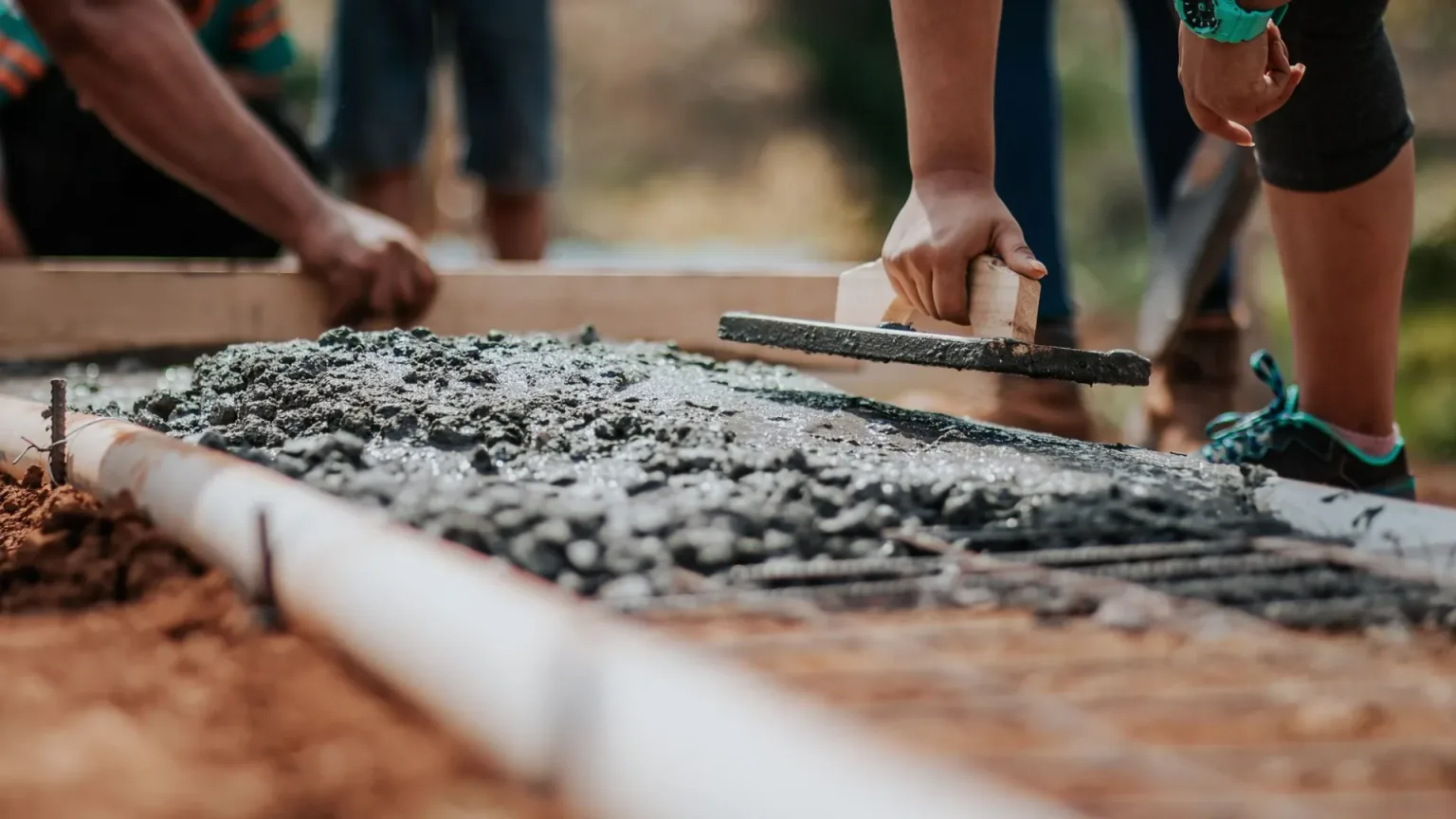
A power-float finish is produced by a machine that smooths the surface of the concrete once it has set enough to take the weight of the float. It gives a dense, flat and hard-wearing surface, and it suits garage floors, workshops and internal floors that need to be level. The surface can be slippery when wet, particularly if it is trowelled to a high polish, so it is often used indoors or in covered areas rather than on an open patio.
A brushed finish is made by drawing a stiff brush across the surface while the concrete is still plastic. The brush leaves fine lines that improve grip, and it is commonly used on paths, ramps and external steps. The brushing has to be done at the right moment, because brushing too early drags the mix and brushing too late leaves the surface too hard to mark.
A broom finish is similar, but it uses a broom or a textured drag to create a rougher pattern. It is a traditional finish for driveways and slabs that take vehicles, and it gives more grip than a power float. The pattern can be made straight or curved, and it is often chosen for the sense of texture it gives to a larger area.
Finishers work with wet cement at close range for long periods. The HSE cement page describes the burn and skin risks, and the gloves and washing that reduce them.
Each of these finishes depends on the timing of the work. The finisher must judge when the surface can take the tool without tearing or dragging, and a surface that is finished in poor weather or at the wrong moment can be weaker or uneven. The curing guide explains why the surface must be protected after it has been finished.
Exposed aggregate
An exposed aggregate finish reveals the stones in the mix by removing the cement paste from the top layer. The removal can be done by washing and brushing the surface before it sets fully, or by grinding or blasting it after it has hardened. The result is a textured surface with a decorative look, and the stone can be chosen for colour and size.
Exposed aggregate is attractive and gives good grip, but it needs skill to produce evenly. The depth of exposure must be consistent, and the surface must be cleaned thoroughly to avoid cement stains. A poorly exposed surface can look patchy, and the loose stones at the top can work free if the mix is weak.
The finish also needs care in use. Loose stones can be displaced by heavy wheels, and the surface is more difficult to clean than a smooth one. It suits patios and paths well, but a driveway that takes frequent turning traffic may need a different finish.
Imprinted and coloured concrete
Imprinted concrete is made by pressing a pattern into the surface while it is still soft, using moulds or stamps. Because the finish is part of the job, it belongs in the mix specification, as the British Ready-Mixed Concrete Association suggests when it describes concrete optimised for its intended use. The pattern can imitate stone, brick or tile, and it is often combined with a coloured hardener or a release agent that gives the surface its tone. The method is quick compared with laying individual units, and it gives a continuous surface.
Coloured concrete can be made by adding pigment to the mix or by applying a colour hardener to the surface. Pigments added to the mix give colour throughout the slab, which is useful when the surface may be worn later. Surface colour is cheaper and more flexible, but it can fade or wear through over time.
The main practical limit is the quality of the work. Imprinted patterns can look artificial if they are repetitive, and the colour can vary between batches of material or areas of the same slab. Ask to see samples of the finish and the colour before the order is placed, and ask the contractor to confirm the release agent and sealer that will be used.
Slip resistance and sealing
Slip resistance is the most important practical point for an outdoor surface. A smooth or polished surface becomes slippery when wet, and a surface that is covered in algae or moss can be dangerous in winter. A brushed, broomed or exposed finish gives better grip, and a sealer can add to the texture or protect the surface from water and staining.
Sealers protect concrete from water, salt and staining, and they make cleaning easier. They are applied once the surface has cured and is dry, and the surface must be free of contamination before the sealer is applied. Some sealers darken the surface or change its sheen, so test a sample on a small area first. Reapply the sealer as the manufacturer recommends, because the protection wears off over time.
Where a surface will be exposed to de-icing salt, the sealer should be chosen with that in mind, and the concrete mix should suit the exposure. The ordering checklist explains how to tell the supplier the exposure conditions so that the mix is chosen with them in mind.
Choosing a finish for the job
A garage floor or utility room needs a finish that is hard-wearing and easy to clean. A power-float surface is usually the right choice, and a sealer can be added if the floor will see oil or chemicals. A patio needs a finish that gives grip and looks good with the house, so a brushed or exposed surface is often preferred. A path needs a finish that gives grip in wet weather, and a brushed texture is the usual answer.
For a surface that carries vehicles, the broom finish is the traditional choice, and the mix and depth must be suitable for the load. A decorative imprint may be attractive on a drive, but it should be specified with the load in mind, because a thin imprinted layer can wear or crack under turning traffic.
Check the finish against the planning and building rules where they apply. Approved Document C covers moisture and contaminants at ground-floor level, which bears on any internal slab that is finished for use. A patio is usually outside the Building Regulations, but a floor in an enclosed space may be within them, and the building regulations guide explains the approval route.
Practical limits and what to ask
Every finish has practical limits. A finish that looks good on a sample may be different on a large area, and the weather on the day can change the surface. Ask the contractor to describe the finish, the tools that will be used, the timing and the aftercare. Ask for a sample area on a small piece of work where possible, and ask what will happen if the finish does not meet the agreed standard.
Ask about the cost of maintenance as well. A decorative or coloured surface may need resealing more often than a plain one, and an exposed surface may need a different approach to cleaning. Those costs belong in the decision, alongside the initial price.
Work with the supplier and the contractor to confirm the mix, the finish and the sealer in writing. A clear specification prevents disagreements later, and it makes it easier to compare quotes on the same basis.
The driveway surfacing guide compares concrete with other surfaces and explains the drainage points that affect the choice. The CDM guide explains the health and safety duties that apply when a finish is laid on a domestic site, including the people who are responsible for the work.
To ask for quotes that describe the finish, the mix and the sealer in the same terms, use the quote form. The services page lists the surfacing and finishing work that can be arranged.
Sources and further reading
- Construction hazardous substances: cement (HSE)
- Ready-mixed Concrete (Mineral Products Association)
- Approved Document C: site preparation and resistance to contaminates and moisture (GOV.UK)