Checking scope and spec in Bristol concrete quotes
Two concrete quotes for the same Bristol job rarely describe the same work. One may include the excavation, the disposal of spoil and a full sub-base, while the other prices only the concrete and the labour to place it. One may specify a slab thickness, a mix and a reinforcement, while the other says simply "concrete slab, per square metre". A fair comparison is impossible until the scope is put on a common footing, and the most useful skill a buyer can develop is the ability to normalise two quotes so that every item sits beside its equivalent. This guide shows how to do that for excavation, the sub-base, thickness, mix, reinforcement, finish and joints, and the terms of payment and defects.
Start with a single written scope
The starting point is a scope that every contractor prices from. It should describe the area in metres, the position of the work on the plot, the access, the current surface and what is to be removed, the finished level and any falls, and the use the surface will receive. A short sketch with dimensions is often enough. Give the same document to every contractor, and ask each one to price against it. Any item that a contractor adds or removes should be stated so that the difference is visible.
A scope written from memory tends to produce quotes that differ for reasons nobody intended. A contractor who assumes the old drive will be broken out and another who assumes it will be left in place have priced different jobs, and the gap between their figures reflects the difference in assumption rather than in value.
Excavation, disposal and sub-base
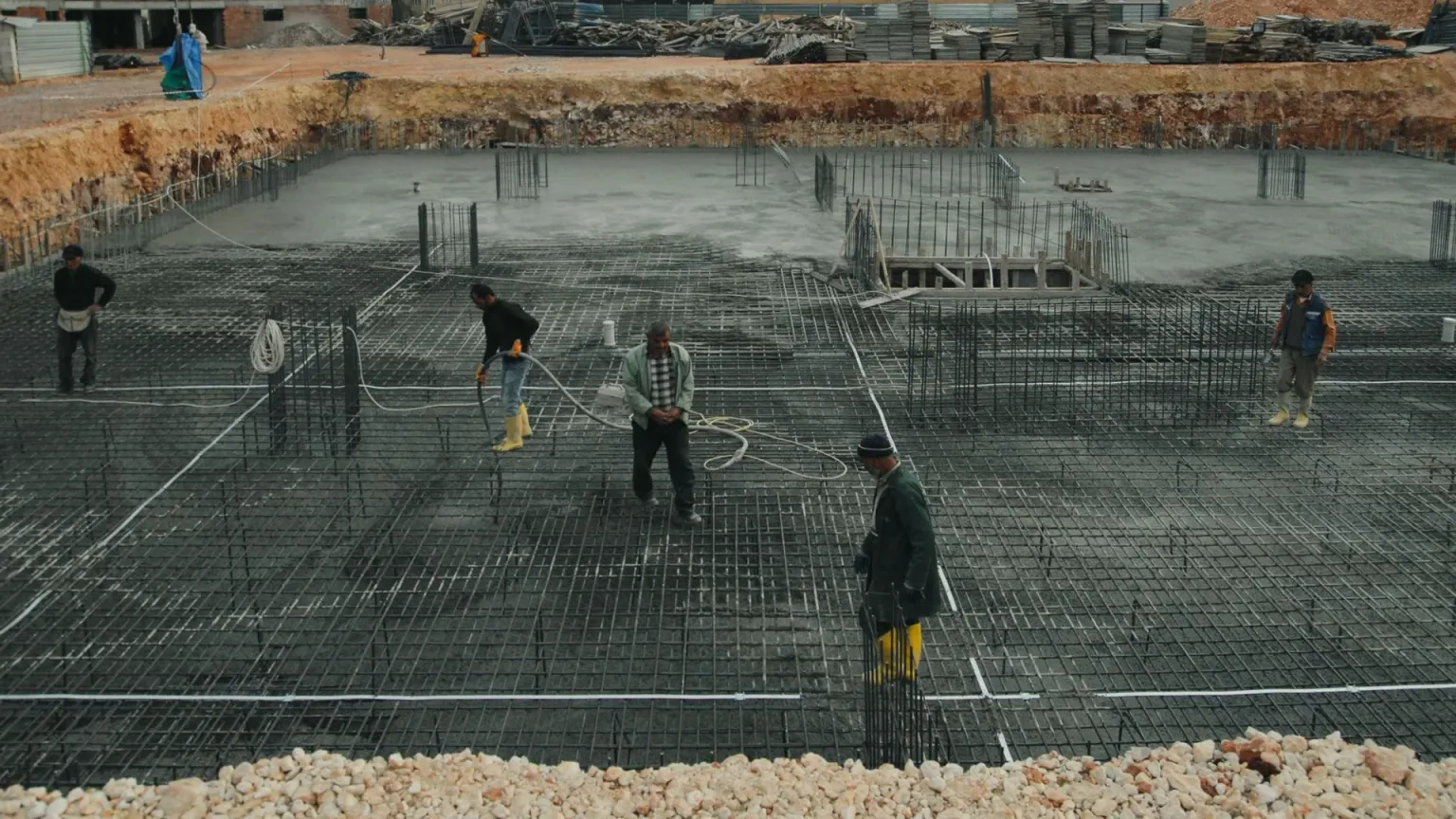
Excavation is the first thing to normalise. The quote should state the depth to be excavated, the method, whether topsoil is removed and whether the spoil is taken away. Some contractors include disposal in the rate, while others charge it separately by the load or by the skip. The disposal item is easy to overlook, so it should be confirmed in writing. The sub-base should also be stated: its material, its depth and how it will be compacted. A quote that says "hardcore" without a depth or a specification leaves the most important part of the job undefined.
The Concrete Centre's guidance on concrete construction describes the importance of a stable, level base, and the sub-base is the element that makes that base possible. When two quotes differ on the sub-base, the difference should be explained, because it often accounts for a large part of the variation in price and in long-term performance.
Thickness, mix and reinforcement
Thickness is the dimension most often omitted from a quote. The concrete depth should be stated in millimetres, and it should match the use. A footpath, a patio and a driveway carry different loads and need different depths, and a quote that does not state the depth cannot be checked against the work. Ask the contractor to confirm the depth in the written scope, and to explain any departure from the depth in the brief.
The mix should be named with its strength class and its exposure, so that the grade on each quote can be read against the same use. Reinforcement follows from the load and from the design. Mesh, bars or fibres may be specified, and each has a cost. A quote that includes reinforcement should name it and give its position, and a quote that omits it should say why it is not needed. Where the surface will carry vehicles, the question of reinforcement should be settled before the price is compared.
The Federation of Master Builders' website offers general information for domestic clients on the building trade, which can help when deciding which details a contractor should set out in writing.
Finish and joints
The finish affects appearance, slip resistance and maintenance. A power-floated surface, a broom finish and an exposed aggregate each have different costs and different characteristics. The quote should name the finish and say whether a curing treatment or sealer is included. Joints are a related point. A slab of any size needs joints to control cracking, and the joint pattern, the type of joint and the materials used to fill it should be shown on the scope. A quote that does not mention joints has probably not considered the cracking that will occur if they are not placed.
Edging belongs to the finish, and the scope should name the form it takes, whether a kerb, a row of block or a timber former. The choice affects both the look and the cost. Ask for the edging to be stated, and check that it is included in the price rather than added later.
Drainage, falls and levels
Drainage should be stated on the scope. The falls should be given as a fall away from the house, the position of any gully or channel should be marked, and any connection to a drain should be described. A quote that does not mention drainage is either assuming that water will run off without help, which is rarely true, or leaving the matter for the client to resolve. Consumer advice on home improvement work is available from Which?, and the principle it reflects is that a buyer should have a clear description of what they are paying for.
Terms of payment and defects
Two parts of a quote are often read last and understood least: the payment stages and the written terms on defects. Payment should be tied to progress. A deposit to secure the date is normal, but a large sum paid before any work begins carries a risk that the buyer should avoid if possible. Stage payments on completion of the groundwork, the concrete and the finish spread the risk and match the money to the work.
The written terms should explain what the contractor will do if the surface fails, over what period, and under what conditions. Terms that exclude the most likely causes of failure, such as cracking from a poor sub-base, need a direct question before the work is agreed. A clear statement of what is covered and what is not is more useful than a general assurance, and a contractor who can set out those terms plainly is showing that the work has been thought through.
Normalising two quotes
Once the scope is written and each quote has been read against it, build a comparison table. Put the items in the same order, with the same headings, and note against each one whether it is included, excluded or priced separately. Where an item appears in one quote and not the other, ask the second contractor to confirm whether it is needed. The difference in headline figure can then be explained in terms of the items, rather than in terms of impression.
The quote page on this site is a practical way to make the scope the basis of every request, because it asks for the information needed to price the job in full. The services page describes the concrete work covered. A comparison built on a single scope is the surest way to find the quote that offers the most value for the work described, and it is also the surest way to avoid a dispute once the work begins.
The questions to finish with
Before accepting any quote, check that it states the area and the depth, the excavation and disposal, the sub-base, the mix and the reinforcement, the finish and joints, the edging and drainage, and the payment and defect terms. A quote that states all of these clearly is one that can be compared fairly with others. A quote that leaves several of them open is not finished, and the buyer should ask for it to be completed before a decision is made.
Two checks before the comparison is final
The first check is the one that most often reveals a difference nobody intended. Read each quote against the scope as if the scope were the contract, and mark every line that departs from it. A contractor who has priced a deeper slab, a stronger mix or a larger area than the scope describes has made an assumption that the others have not, and that assumption must be resolved before the figures can be compared. The same reading should be applied to the notes at the foot of each quote, because exclusions are often stated there in small print and are easy to miss when the figures are read in the body of the document.
The second check concerns the sequence of work. A quote that lists the items in an order different from the work itself is harder to verify, and a sensible contractor will present the stages in the order they will be carried out: preparation, excavation, sub-base, membrane, formwork, reinforcement, pour, finish, curing and making good. Where one quote follows that order and another does not, the difference is not a matter of presentation alone, and it is worth asking the second contractor to restate the price against the same sequence. The guide on spotting missing items in a Bristol concrete quotation lists the items most often left out, and it is a useful companion to this check.
Once the scope and the sequence agree, the timing of the delivery becomes the next point to confirm. The price of the concrete is set once the volume is known, but the programme depends on how the deliveries are arranged, and ready-mix deliveries in Bristol explains what happens on the day and why the order of work matters. A comparison that considers the scope, the sequence and the timing together is far more reliable than one that considers the headline figure alone.
Sources and further reading
- The Concrete Centre: material, design and construction guidance (The Concrete Centre)
- Federation of Master Builders (Federation of Master Builders)
- Which? consumer advice (Which?)