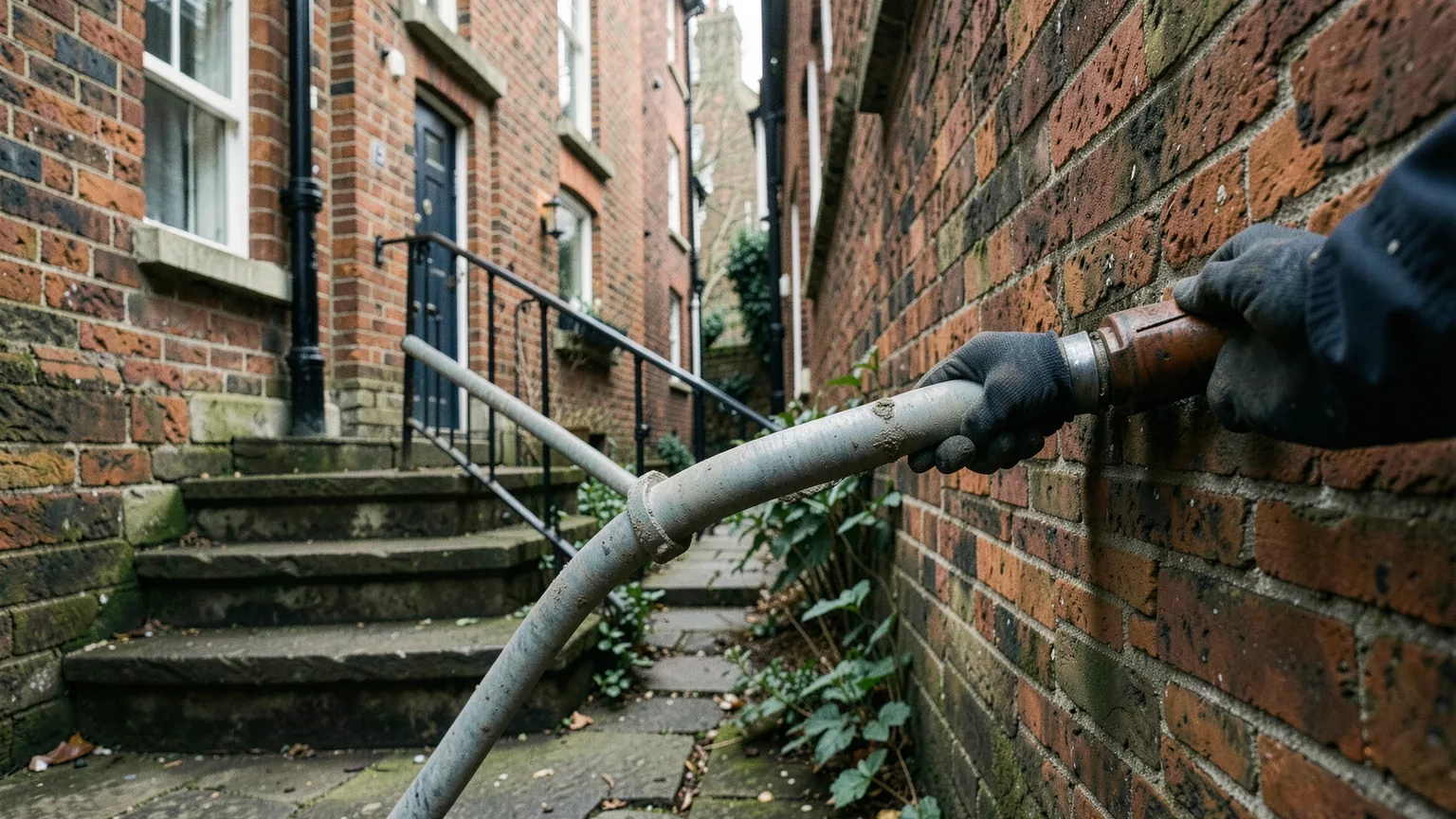
Terraced streets and concrete deliveries in Bristol
Concrete deliveries to older terraced streets in Bristol are harder than deliveries to a new estate. The road is often narrow, the parking is tight, the houses open straight onto the pavement and the neighbours share the same space. Those conditions do not make a pour impossible, but they do change how it has to be planned. This guide covers the permissions that can be needed, the road width and weight issues to consider, the use of pumps from the road, and the courtesies that keep a street on side during the work.
Why terraced streets are different
Terraced housing was built before mixer lorries existed, and many streets have a carriageway that is only just wide enough for two cars to pass. Parked vehicles narrow the road further, and a mixer lorry needs room to manoeuvre into a position where the drum can discharge close to the work. Kerbs, bollards and street trees add further constraints.
The pavement is also part of the picture. A front garden or a drive crosses the footway, and the lorry or the pump may need to stand on the pavement or the carriageway while the concrete is placed. Pavements are generally not designed to carry the weight of a loaded mixer, and any crossing point needs to be checked before the lorry is booked.
Concrete is a material that cannot wait. The British Ready-Mixed Concrete Association describes the product as delivered just in time to site, and once it has been batched it must be placed within a limited time. A lorry that cannot reach the site or that is held up in traffic causes a real problem for the pour, so the planning needs to be done in advance.
Parking bay suspension requests
A parking bay suspension temporarily removes parking restrictions so that a vehicle can stand where it is needed. For a concrete pour in a terraced street, a suspension can keep the bay clear for the lorry or the pump, and it prevents the driver from being forced to stop further away.
The suspension is arranged with the council's highways team, and the request must be made in advance. Expect a notice period, a fee and a set of conditions that may include the times the bay can be used and the need to inform residents. Ask the council how far ahead the request should be made, because a short-notice request may be refused.
A suspension does not give the lorry the right to block the road, cross the pavement or drive over a dropped kerb. Where a crossing is needed, the highway rules still apply, and the Highways Act 1980, section 184 sets out the framework for vehicle crossings over footways and verges.
Road width and weight limits
Road width is the first constraint. Measure the carriageway at the point where the lorry will stop, and check the path it will take from the main road. A narrow turn or a sharp corner may stop the lorry entirely, and a wide vehicle that cannot stop close to the pour point is of little use.
Weight is the second constraint. A loaded mixer is heavy, and a narrow street with a weak surface or an old culvert may not be suitable for it. The highway authority can restrict vehicle weights on some routes, and a supplier that knows the area will often advise on which streets are suitable. Ask the supplier to confirm its route and its weight before the order is placed.
Before any vehicle crosses a footway to reach a terraced property, a dropped kerb has to be in place. The Planning Portal's guidance on dropped kerbs sets out the application route through the local authority. Without one, the lorry should wait on the carriageway.
The drive or path where the concrete is placed must also take the load. A lorry that discharges onto a front garden drive can crack the drive or damage the drain beneath it. Where the lorry will not drive over the surface, the pump or the barrow route becomes the better option.
Using pumps from the road
A pump is often the answer for a terraced house with no side access. A boom pump can stand in the road and project concrete over the front of the house or into the front garden, and a line pump can run a hose along the pavement or through a side passage. Both methods reduce the amount of heavy handling required and keep the lorry at a distance from the pour.
Pumping from the road needs its own planning. The pump needs a firm base for its outriggers, and the pavement and the carriageway must be checked for buried services. The arm of a boom pump must clear overhead wires, trees and the upper storey of the houses. An operator who is used to terraced streets will be able to assess the set-up quickly, but the homeowner should still confirm the arrangement in advance.
The pump operator may need a parking bay suspension, a traffic management arrangement or a clear run for the vehicle. Those details should be agreed with the supplier and the pump company before the day. The pumping and barrowing guide sets out the cost factors and the choice between the two methods.
Neighbour notice
A concrete pour in a terraced street affects the neighbours even when the work is small. The lorry or the pump may block a drive, the noise of the drum and the pump can be heard along the terrace, and the road may be closed for an hour. A short notice on the doors of the adjoining houses, giving the date, the time and a contact number, prevents most complaints.
Tell the neighbours about the timetable, and say what will be done to keep the street clear. If a neighbour has a drive that the lorry must cross or block, agree the arrangement in person rather than leaving a note. A neighbour who is told in advance is far more likely to move a car or accept a short delay.
Ask the supplier to confirm the time it expects to arrive and how long it will stay. Give the neighbours a realistic figure, and let them know if the timing changes.
Planning the day
Plan the sequence of the pour so that the lorry arrives when the team is ready and the formwork is in place. Check the weather forecast, because heavy rain can delay the placing of the concrete and cold weather can affect the curing. Have the protective covers ready for the surface, as described in the curing guide.
Keep the pavement clear for pedestrians during the pour. A barrier or a cone line, with a board across the work area if necessary, keeps people away from the lorry and the pump. The site must remain safe for children and older residents who use the street.
Ask the supplier to confirm the contact number of the driver and the site contact, and agree who will speak to the council and the neighbours if the timing changes. A single named person on the street, with a phone that will be answered during the pour, saves a great deal of confusion when a lorry is stuck at the end of the road and the team is waiting at the other.
If the front garden is to be paved as part of the work, the front garden guide explains the planning rules for drives. The driveway surface guide compares the surfaces that suit terraced houses. To ask for a delivery plan that suits your street, use the quote form, and include the road width and the parking arrangements in the notes.
Deliveries to terraced streets are a matter of planning rather than luck. A suspension requested in good time, a route checked in advance and a neighbour told before the lorry arrives will cover most of what goes wrong. For a drive or a delivery plan on a terraced street, the services page lists the concrete work that can be arranged.
Sources and further reading
- Ready-mixed Concrete (Mineral Products Association)
- Highways Act 1980, section 184: vehicle crossings over footways and verges (legislation.gov.uk)
- Dropped kerbs (Planning Portal)